
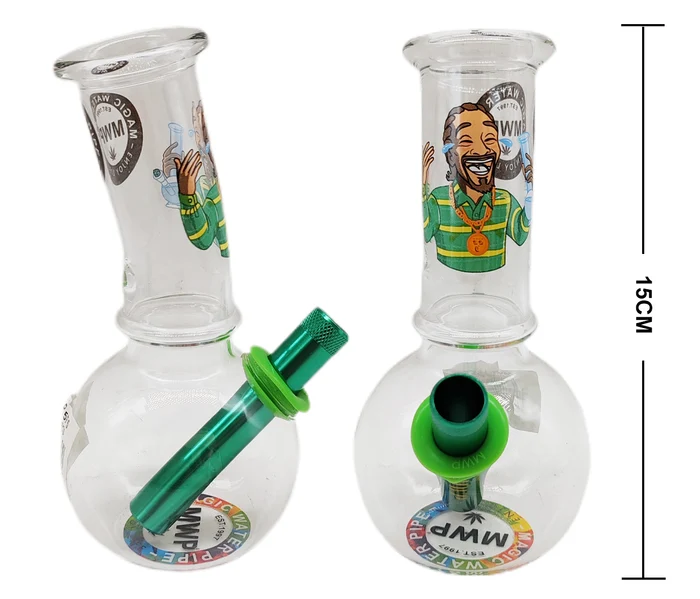
Buying a bong can become confusing surprisingly quickly.
You may start by looking for a simple glass piece, then suddenly find yourself comparing beakers, straight tubes, percolators, different glass thicknesses, joint sizes and dozens of designs.
The good news is that you do not need the most complicated option.
When comparing bongs, focus first on how the piece will fit into your everyday routine. Size, stability, material, cleaning and construction usually matter more than decorative features.
This guide breaks down the main differences so you can choose with more confidence.
Quick Answer: What Type of Bong Should You Choose?
There is no single design that suits everyone.
| What Matters Most | Good Starting Point |
| Simple everyday setup | Medium beaker bong |
| Easy cleaning | Straight tube bong |
| Better base stability | Wide-base beaker bong |
| Compact storage | Small or mini bong |
| Extra internal filtration | Percolator bong |
| Greater resistance to drops | Silicone bong |
| Traditional glass feel | Borosilicate glass bong |
| Easier replacement parts | Common 14mm or 18mm fittings |
Once you know what matters most to you, narrowing down the choices becomes much easier.
1. Choose a Bong Around Your Routine
One of the biggest buying mistakes is choosing entirely by appearance.
A colourful or complex piece may look impressive online, but think about how you will actually use and store it.
- Where will the bong normally stay?
- Will you move it frequently?
- How much storage space do you have?
- Do you prefer simple cleaning?
- Is stability important?
- Do you want easily replaceable components?
Someone with permanent table space may be comfortable with a larger glass piece.
Someone who needs to put the bong away regularly may prefer a smaller and simpler design.
The right bong should fit your routine rather than forcing you to change it.
2. What Bong Size Should You Buy?
Size is one of the first specifications worth checking.
Bongs are generally available in small, medium and large designs.
Small Bongs
Small bongs are useful when storage space is limited.
They are generally lighter, easier to move and simpler to store in smaller areas. Their smaller chambers may not appeal to buyers who prefer a larger setup, but compact dimensions are often the main attraction.
Best for: compact storage and limited space.
Medium Bongs
Medium-sized pieces provide a useful middle ground. They offer more chamber space than mini designs without becoming excessively large or difficult to store.
For someone unsure where to start, a medium bong is often a practical option.
Best for: buyers looking for balanced dimensions.
Large Bongs
Large bongs provide more internal space and may feature more elaborate designs. They can also become heavier and require more room for storage and cleaning.
A large piece makes more sense when you already know you want a permanent setup.
Best for: buyers with dedicated storage and table space.
3. Beaker Bong vs Straight Tube
Base shape changes both appearance and practicality.
Beaker Bongs
Beaker bongs have a wide lower chamber similar to laboratory glassware. Their main advantage is stability. The wider base gives the piece a larger footprint when placed on a table or flat surface.
- wide base
- familiar shape
- good stability
- large lower chamber
- broad range of available sizes
They do require more horizontal space than narrow straight tubes.
Straight Tube Bongs
Straight tubes maintain a narrower profile from the bottom toward the mouthpiece. Their simpler construction often appeals to buyers who value easy maintenance and a clean design.
- straightforward construction
- narrow footprint
- simple appearance
- fewer complicated internal areas
The narrower base means you should pay closer attention to stability, particularly with taller pieces.
Which One Should You Choose?
Choose a beaker if a stable base is one of your priorities. Consider a straight tube if you prefer a narrow, uncomplicated design. Neither option is universally better. They simply suit different preferences.
4. Glass, Silicone or Acrylic?
Material affects weight, durability, appearance and maintenance.
Borosilicate Glass
Borosilicate glass is widely used for quality smoking glassware. It handles changes in temperature better than ordinary household glass and provides the clear appearance many buyers associate with traditional glass pieces.
Transparency also makes residue easier to notice during cleaning. Glass does require careful handling because even thick glass can still break.
Silicone
Silicone is useful when durability is more important than the traditional glass appearance. It is flexible and highly resistant to accidental drops. The feel and appearance are very different from glass, so silicone tends to appeal to buyers with specific priorities.
Acrylic
Acrylic generally appears among more budget-oriented pieces. It is lightweight and much less vulnerable to breakage than glass. However, it does not offer the same visual clarity or premium feel.
When comparing different bongs, material should be chosen according to your routine rather than appearance alone.
5. How Thick Should Glass Be?
Glass thickness is often highlighted heavily in product specifications. Typical options may include:
- 3mm
- 5mm
- 7mm
- 9mm
Thicker glass generally creates a heavier and more substantial piece. A 5mm bong can provide a useful balance between manageable weight and solid construction. Seven- and nine-millimetre options can feel noticeably heavier.
However, thickness should never be the only measurement of quality.
- quality of joints
- base construction
- glass workmanship
- overall balance
- finishing quality
- type of glass
A poorly made 9mm bong is not automatically better than a properly constructed 5mm piece. Look at the entire build.
6. Do You Need a Percolator?
Percolators are one of the most recognisable features found inside modern glass pieces. They are internal structures designed to increase diffusion as smoke moves through the water.
- honeycomb percolators
- tree percolators
- showerhead percolators
- inline percolators
- matrix percolators
These designs can make a glass piece look far more elaborate. But there is an important trade-off. More internal components usually mean more areas that need cleaning.
If easy maintenance is one of your priorities, a straightforward beaker or straight tube may suit you better. If you deliberately want a more complex glass design, then a percolator model is worth comparing.
Do not assume that more features automatically mean a better purchase.
7. Check the Joint Size
Joint size is one of the easiest specifications to overlook. It can also become extremely important later. Common glass-on-glass joint sizes include 14mm and 18mm.
- bowls
- downstems
- adapters
- ash catchers
- other glass accessories
Imagine accidentally breaking your bowl several months after buying the bong. A commonly used joint size can make finding a compatible replacement much easier. Unusual fittings may limit your options.
This is why product measurements deserve just as much attention as photographs.
8. Think About Cleaning Before Buying
Cleaning is rarely the first thing someone thinks about when looking at a new bong. It should still influence the decision. Simple designs tend to have fewer hidden areas where residue can accumulate.
Usually Easier to Maintain
- basic beakers
- straight tubes
- removable downstems
- accessible chambers
- uncomplicated internal structures
Usually More Involved
- multiple percolators
- recycler designs
- narrow internal pathways
- fixed internal components
- multi-chamber glass designs
A complex piece may look impressive while it is brand new. Think about how easy that same piece will be to maintain several months later. If you dislike cleaning, simplicity can be one of the most valuable features available.
9. Cheap Bong vs Premium Bong
Price differences between bongs can be substantial. That does not mean the most expensive option is automatically the best one for you.
- thicker glass
- more intricate glasswork
- larger dimensions
- additional filtration
- better-finished joints
- more complicated construction
- heavier materials
- distinctive designs
A simple bong can still provide excellent value when complicated features are unnecessary. Likewise, choosing the cheapest piece available may not save money if you quickly decide it does not meet your needs.
When browsing bongs, compare what you are receiving for the price rather than judging a product only by whether it is cheap or expensive.
10. Common Bong Buying Mistakes
Buying Entirely by Appearance
Appearance matters, but dimensions, material and maintenance will influence ownership for much longer.
Assuming Bigger Is Better
A large bong requires more room and can be more difficult to move. Choose a size that actually fits your space.
Ignoring Glass Thickness
Check construction specifications when durability matters to you.
Forgetting Joint Size
Compatible replacement components become important when something eventually needs replacing.
Choosing Too Many Features
More chambers and percolators are not essential for everyone.
Ignoring Maintenance
Complicated internal glasswork generally requires additional cleaning. Consider that before placing the order.
Bong Buying Checklist
Size
Will it comfortably fit where you intend to keep it?
Base
Would you prefer a wide beaker or narrower straight design?
Material
Does glass, silicone or acrylic better suit your routine?
Glass Thickness
Is the thickness clearly specified?
Joint Size
Will compatible replacement components be easy to find?
Filtration
Do you actually want additional percolation?
Cleaning
Can the important sections be cleaned without unnecessary difficulty?
Included Components
Does the bong include the bowl, downstem or other parts you expect?
Storage
Can you store it safely when it is not being used?
Value
Are you paying for features you genuinely want?
Answering these questions can eliminate many unsuitable options before you buy.
Frequently Asked Questions
What type of bong is best for beginners?
A simple medium-sized beaker or straight tube is often a practical starting point because it avoids unnecessary complexity. The better choice depends mainly on whether you value stability or simpler construction.
Is a beaker bong better than a straight tube?
Not necessarily. Beaker bongs have wider bases and often provide better stability. Straight tubes offer a narrow, straightforward design. Both can be good choices depending on your space and priorities.
Is 5mm glass thick enough?
Five-millimetre glass is a common middle-ground option. Thicker 7mm and 9mm glass can feel heavier and more substantial, although glass thickness should always be considered alongside overall construction quality.
Are thicker glass bongs better?
Not automatically. Thicker glass can provide a more substantial construction, but it also increases weight and often price. Quality workmanship remains important regardless of thickness.
What are common bong joint sizes?
14mm and 18mm are commonly encountered sizes. Always check the exact measurements of your bong before buying replacement components.
Is a percolator bong worth buying?
It depends on your preferences. Percolators add internal diffusion and more complex glasswork, but they can also create additional cleaning requirements.
What size bong should I buy?
Choose according to your available space and storage needs. Small pieces are easier to store. Medium pieces provide a balanced option. Large bongs generally make more sense for permanent setups.
What should I check before buying a bong online?
Look at size, material, glass thickness, base style, joint measurements, included components, filtration, storage requirements and cleaning accessibility.
Final Thoughts
Choosing a bong becomes easier when you stop looking for the option with the longest feature list.
Start with your own requirements. How much space do you have? Do you want a wide, stable base? Would you prefer thicker glass? How much cleaning are you willing to do? Do you need a percolator? Will replacement parts be easy to find?
The Australian market offers bongs across many sizes, materials and designs, so narrowing your priorities before shopping can save a lot of unnecessary comparison.
For one buyer, a simple medium beaker may be ideal. Another may prefer a compact straight tube. Someone else may intentionally choose thick borosilicate glass with more detailed internal filtration.
The best choice is ultimately the bong that fits your available space, budget, maintenance preferences and everyday routine.