
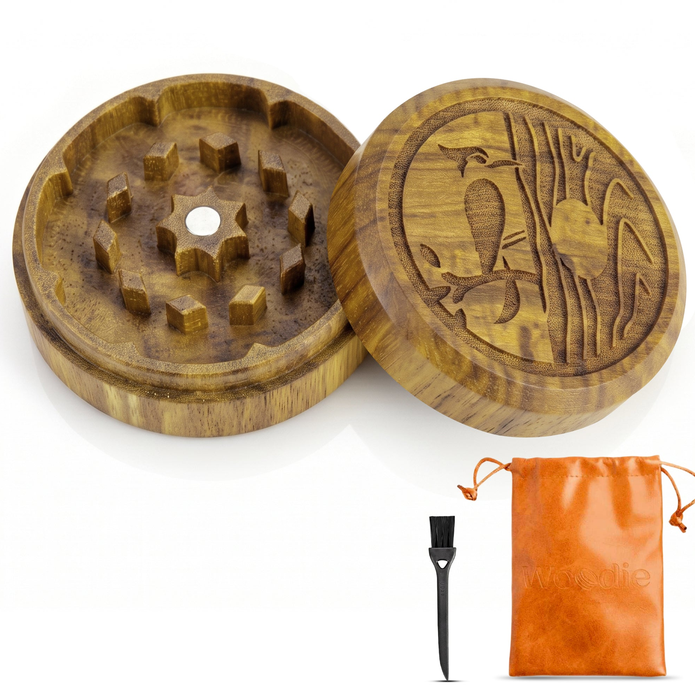
Choosing between wooden and metal herb grinders involves more than appearance. The material, grinding mechanism, number of chambers, cleaning requirements and construction quality all influence how a grinder performs over time.
Metal grinders are widely available and often favored for their hard grinding teeth, consistent machining and variety of multi-chamber designs. Wooden grinders offer a different experience, combining natural materials, distinctive grain patterns and a traditional appearance.
However, not every wooden grinder works the same way. Some wooden models use metal pins as grinding teeth, while others feature grinding surfaces carved directly from solid hardwood.
A well-designed wooden herb grinder can provide an appealing alternative to conventional metal models, especially for buyers who value craftsmanship, simple construction and natural materials.
Neither material is automatically superior. The right choice depends on what matters most to the individual buyer.
This guide compares wooden and metal herb grinders across performance, durability, grinding mechanisms, maintenance, portability and overall value. It also examines how modern hardwood grinders differ from older wooden designs.
Quick answer: Metal grinders often offer greater resistance to tooth wear and more multi-chamber options. High-quality wooden grinders offer distinctive craftsmanship, natural texture and straightforward two-piece designs. For most buyers, tooth geometry, build quality and maintenance matter just as much as the material itself.
In This Guide
- Wooden vs metal grinder comparison
- Grinding teeth and mechanisms
- Grinding performance
- Durability and lifespan
- Cleaning and maintenance
- Two-piece vs four-piece designs
- Exotic hardwood materials
- Price and long-term value
- Buying checklist
- Frequently asked questions
- Wooden vs Metal Herb Grinders: Key Differences
Wood and metal differ in hardness, moisture response, surface texture and manufacturing possibilities.
These material properties influence how grinders are designed and maintained. However, individual products can perform very differently even when made from the same material.
| Feature | Wooden Grinder | Metal Grinder |
| Primary material | Natural hardwood or wood with other components | Usually aluminum, steel or metal alloy |
| Grinding teeth | Wooden teeth or metal pins, depending on design | Usually machined metal teeth |
| Appearance | Natural grain and distinctive patterns | Metallic, anodized or other manufactured finishes |
| Durability | Depends on hardwood, tooth design and care | Generally strong resistance to tooth wear |
| Moisture resistance | Requires protection from excessive moisture | Generally more tolerant of moisture, depending on finish |
| Cleaning | Usually dry brushing and careful maintenance | Cleaning methods vary by metal and finish |
| Common construction | Often two-piece | Two-, three- or four-piece |
| Separate fine-particle collection | Usually absent in basic two-piece models | Available in screened multi-piece models |
| Best fit | Natural aesthetics and minimalist design | Broad feature selection and hard-wearing teeth |
One important distinction is that wooden grinders should not be treated as a single category of construction.
A mass-produced wooden grinder with metal pins can behave differently from a precisely machined grinder with solid wooden teeth.
The same applies to metal. A carefully machined aluminum grinder may operate quite differently from an inexpensive cast-metal model.
- Grinding Teeth: Why the Mechanism Matters
Grinding teeth are among the most important components of a manual herb grinder.
When the two halves rotate against each other, the teeth break apart dried botanical material.
Their shape, spacing, alignment and material influence resistance, particle size and the overall feel of the grinding action.
Metal Grinder Teeth
Conventional metal grinders often feature diamond-shaped or similarly machined teeth.
Well-made metal teeth can withstand repeated use and resist deformation.
Metal also allows manufacturers to produce relatively narrow tooth profiles and detailed cutting geometries.
However, performance depends on machining accuracy, alignment, finish quality and maintenance.
A metal grinder is not automatically high quality simply because its teeth are made from aluminum or stainless steel.
Traditional Wooden Grinders With Metal Pins
Some older or inexpensive wooden grinder designs use short metal pins inserted into the wood.
The wooden body provides the appearance and grip, while the metal pins perform the grinding action.
These designs are different from grinders featuring teeth carved directly from hardwood.
Buyers comparing wooden grinders should confirm which type of mechanism a product actually uses.
Modern Solid-Wood Grinding Teeth
A distinctive example is Woodie Wood Grinder, which states that its diamond-shaped teeth are carved directly into solid hardwood.
The company uses CNC machining to produce the grinding surfaces before individually hand-finishing each grinder.
This construction removes the need for metal teeth within the grinding mechanism.
However, the product still uses a metal-containing magnetic closure, so it should not be described as completely metal-free.
The advantage of this approach is the combination of natural material and precision-shaped grinding surfaces.
Its long-term performance will still depend on the condition of the wooden teeth and appropriate care.
- Which Material Provides Better Grinding Performance?
There is no universal winner in grinding performance.
The result depends on tooth geometry, chamber dimensions, the condition of the material being ground and the force applied.
Grinding Consistency
A well-made grinder should break botanical material into reasonably consistent pieces without requiring excessive force.
Metal grinders can offer precise tooth profiles, particularly when manufactured using CNC machining.
Wooden grinders with properly aligned teeth can also produce a usable, consistent grind, although the resulting particle size may differ.
It is therefore more useful to compare actual tooth geometry than simply compare wood against metal.
Coarse vs Fine Grinding
Some users prefer a coarser texture, while others want finer material.
The grinder’s design strongly influences the result.
Factors include:
- Number and shape of teeth.
- Distance between opposing teeth.
- Chamber depth.
- Whether material passes through holes.
- Construction tolerances.
- Condition of the dried botanical material.
A two-piece grinder typically requires the user to assess the result within the grinding chamber.
Some multi-piece grinders allow smaller particles to pass through openings into a lower chamber.
Smooth Rotation and Resistance
A grinder that rotates smoothly can feel easier to use than one with poorly aligned parts.
The material alone does not guarantee smooth rotation.
Magnetic closure design, surface finishing, tooth alignment and residue buildup can all affect operation.
For wooden grinders, keeping the contact surfaces clean and dry is particularly important.
- Durability: Do Wooden or Metal Grinders Last Longer?
Durability is one of the most common concerns when comparing wooden and metal grinders.
Well-made metal grinding teeth generally resist wear and impact better than wooden teeth.
This can make quality metal grinders attractive for buyers who prioritize hard-wearing construction.
However, overall durability also depends on the grinder’s design and manufacturing.
Metal Grinder Durability
A quality aluminum or stainless steel grinder can provide dependable long-term use.
Potential issues include damaged teeth, worn threads, scratched finishes and accumulated residue.
The severity of these issues varies considerably between products.
Premium materials do not eliminate the need for regular cleaning.
Wooden Grinder Durability
Hardwood grinders require different maintenance considerations.
Wood naturally responds to moisture and changes in environmental conditions.
Excessive water exposure can contribute to swelling, distortion or damage to the finish.
Wooden teeth may also be more vulnerable to impact or chipping than metal teeth.
These limitations do not mean a hardwood grinder is unsuitable for regular use. They mean the owner should follow the manufacturer’s care recommendations.
Does Exotic Hardwood Make a Difference?
Different hardwood species vary in density, grain structure, hardness and appearance.
A carefully selected hardwood can provide an attractive and durable foundation for a precision-made grinder.
However, exotic wood alone does not prove that a product will outlast a well-made metal grinder.
The quality of machining, tooth construction and finish still matters.
- Cleaning and Maintaining Wooden vs Metal Grinders
Cleaning requirements are an important practical difference between grinder materials.
Residue and small plant particles can accumulate around teeth, contact surfaces and chamber edges.
Regular cleaning helps keep the mechanism operating smoothly.
How to Care for a Wooden Herb Grinder
For a wooden grinder, the safest starting point is the manufacturer’s specific instructions.
Woodie advises owners to avoid excessive water and heat.
Its published care instructions recommend applying beeswax or hemp oil sparingly with a cloth to restore the exterior finish.
A practical care routine includes:
- Empty the grinding chamber after use.
- Remove loose particles using a soft, dry brush.
- Check around the wooden teeth for trapped debris.
- Avoid soaking the grinder in water.
- Avoid excessive heat and prolonged damp storage.
- Follow the manufacturer’s instructions for exterior conditioning.
Woodie’s exterior conditioning advice should not be interpreted as a recommendation to apply oil or wax directly to the grinding teeth.
Avoid alcohol, harsh solvents or abrasive cleaning methods unless the manufacturer confirms they are suitable for the particular finish.
How to Clean a Metal Grinder
Metal grinders generally tolerate a wider range of cleaning methods, but the specific finish and components still matter.
A basic routine includes removing loose material with a brush and checking moving parts for buildup.
Some manufacturers permit more thorough cleaning of detachable metal components with approved cleaning solutions.
However, users should not assume that every grinder is dishwasher-safe or solvent-resistant.
Coatings, plastic parts, magnets and adhesives may have different cleaning limitations.
Which Is Easier to Maintain?
Metal grinders may be easier to clean deeply when their components and finishes tolerate the chosen method.
Simple wooden two-piece grinders can be easy to brush out because they have fewer separate chambers.
However, wood requires greater attention to moisture and surface protection.
- Two-Piece vs Four-Piece Herb Grinders
The number of grinder pieces affects the ownership experience independently of material.
Two-Piece Herb Grinders
A two-piece grinder typically consists of a toothed lid and toothed base.
The material is ground between the halves and remains inside the main chamber until removed.
Advantages include:
- Simple construction.
- Fewer separate parts.
- Compact design.
- Direct access to ground material.
- No additional collection screen to maintain.
Woodie uses this minimalist two-piece design across its main hardwood grinder collection.
Four-Piece Herb Grinders
A conventional four-piece grinder adds compartments below the grinding mechanism.
Many designs include a collection chamber, a fine screen and a lower compartment for separating fine particles.
These features appeal to buyers who want separate collection, but they also add parts that require cleaning.
Two-Piece vs Four-Piece Comparison
| Feature | Two-Piece | Four-Piece |
| Main function | Grinding in one chamber | Grinding and separating material |
| Number of parts | Two | Four |
| Separate collection chamber | No | Usually yes |
| Screen | No | Commonly included |
| Cleaning complexity | Fewer components | More components |
| Typical advantage | Simplicity and portability | Additional collection features |
The better design depends on whether the buyer prefers a minimal mechanism or additional collection features.
- Exotic Hardwood Grinders: Canary Wood, Wenge and Bloodwood
One of the major distinctions between wooden and metal grinders is the natural variation of hardwood.
Each piece of wood has a grain pattern formed through natural growth.
Consequently, two grinders manufactured from the same species can still differ visually.
Woodie Wood Grinder offers several models based on different exotic hardwoods.
Tigers Eye: Canary Wood
The Woodie Tigers Eye is crafted from Canary wood.
This wood is known for its distinctive color variations, including warm golden and brown tones.
The result is a grinder with a natural appearance that varies between individual pieces.
Onyx: Wenge Wood
The Woodie Onyx uses Wenge, a dark hardwood with a visually distinct grain.
It offers a different appearance from lighter-colored hardwood models.
Its construction follows Woodie’s two-piece design with solid-wood grinding teeth.
Jasper: Bloodwood
The Woodie Jasper is made from Bloodwood, known for its reddish coloration.
Like the other models, it combines precision machining with hand-finishing.
Woodie Hardwood Comparison
| Model | Wood | Visual Character |
| Tigers Eye | Canary wood | Golden and brown grain |
| Onyx | Wenge | Dark, contrasting grain |
| Jasper | Bloodwood | Rich reddish appearance |
The differences between these models are primarily material appearance and wood character.
Their basic grinding mechanism remains similar.
Buyers should select the wood they prefer rather than assuming a particular color guarantees better grinding performance.
- Are Wooden Herb Grinders Worth the Price?
Value depends on construction quality, features, durability and the preferences of the buyer.
A basic metal grinder may cost less than a premium handcrafted wooden model.
However, a simple price comparison does not capture differences in manufacturing, materials or design.
What Are You Paying for in a Premium Wooden Grinder?
A thoughtfully manufactured hardwood grinder can incorporate:
- Carefully selected hardwood.
- Precision-machined components.
- Hand-finishing.
- Distinctive natural grain patterns.
- Purpose-designed grinding teeth.
- Magnetic closure.
- Included storage or cleaning accessories.
Woodie, for example, describes its grinders as CNC-machined and individually finished with food-grade oils and waxes.
Its models include a carrying pouch and cleaning tool.
These are identifiable product features, rather than proof that every wooden grinder outperforms metal alternatives.
When a Metal Grinder May Offer Better Value
A metal grinder may make more sense when the buyer prioritizes hard grinding teeth, multiple chambers or greater tolerance for intensive cleaning.
A quality aluminum grinder can be a practical choice when decorative craftsmanship is less important.
When a Wooden Grinder May Offer Better Value
Wood may be more appealing when natural appearance, hand-feel and minimalist construction are important buying considerations.
For some shoppers, a hardwood grinder also has value as a distinctive, craft-focused accessory or gift.
The best purchase is the one whose features match the intended use and maintenance preferences.
- What to Look for Before Buying a Wooden or Metal Grinder
When comparing grinders, start with the mechanism rather than choosing solely by appearance.
Here are seven practical checks.
- Identify the Grinding Teeth
Determine whether the grinder uses machined metal teeth, metal pins or solid-wood teeth.
Check how the teeth are attached and whether the design looks consistent.
- Examine the Material
For wood, look at the hardwood species, finish and construction.
For metal, consider the alloy, machining quality and protective finish, where applicable.
- Check the Closure
A lid should close securely while allowing the grinder to rotate as intended.
Magnets, threading and other closure systems should be appropriate for the design.
- Compare the Number of Chambers
Choose a two-piece design when simplicity matters most.
Consider multi-piece designs if separate collection features are important.
- Understand Cleaning Requirements
Check whether the manufacturer recommends dry brushing, specific cleaning solutions or particular maintenance products.
- Consider Size and Portability
A compact grinder may be easier to carry and store.
A larger grinder may provide additional chamber capacity.
Actual dimensions should be checked rather than inferred from product photos.
- Review Verified Product Information
Look for clear material descriptions, construction details, care instructions, warranty terms and genuine customer feedback.
A wooden tobacco grinder should be evaluated using the same basic quality criteria as other manual dry-herb grinders.
The intended material must also be appropriate for the grinder’s design and manufacturer guidance.
- Which Grinder Should You Choose?
Instead of assuming one material is best, consider the priorities that matter most.
| Your Priority | Option Worth Considering | Reason |
| Natural appearance | Hardwood | Unique grain and material texture |
| Hard-wearing grinding teeth | Quality metal | Generally stronger resistance to tooth wear |
| Minimal components | Two-piece design | Simple construction |
| Separate fine-particle collection | Screened multi-piece design | Dedicated collection compartment |
| Craftsmanship and distinctive materials | Premium hardwood | Natural variation and hand-finishing |
| More intensive cleaning flexibility | Suitable metal construction | Broader cleaning options when approved |
For buyers interested in a wood tobacco grinder, the quality of the wooden teeth, finish and closure should be assessed alongside appearance.
Those who prefer multiple chambers and harder grinding surfaces may find a well-machined metal grinder more suitable.
Ultimately, build quality and actual design matter more than broad claims about one material being universally better.
- Frequently Asked Questions
Are Wooden Grinders Better Than Metal Grinders?
Not in every situation. Wooden grinders offer natural appearance and distinctive craftsmanship. Metal grinders often provide harder grinding teeth and a wider range of multi-chamber designs. The better option depends on the buyer’s priorities.
Do Wooden Herb Grinders Actually Work?
Yes. A properly constructed wooden grinder can break apart dried botanical material. Performance depends on its tooth design, alignment and condition.
Can Wooden Grinders Have Wooden Teeth?
Yes. Some manufacturers carve the grinding teeth directly from solid hardwood. Other wooden grinders use metal pins inserted into the body.
Are Metal Grinders More Durable?
Quality metal teeth generally resist wear and impact better than wooden teeth. However, overall durability also depends on the design, finish and maintenance.
How Do You Clean a Wooden Grinder?
Start with the manufacturer’s instructions. Generally, loose particles can be removed using a soft, dry brush. Avoid soaking wooden grinders or exposing them to excessive heat.
Can You Wash a Wooden Grinder With Water?
Wooden grinders should not be soaked unless the manufacturer specifically permits it. Excess moisture may affect the wood and finish.
Are Two-Piece Grinders Better Than Four-Piece Grinders?
A two-piece grinder offers a simpler mechanism with fewer components. A four-piece grinder may include collection chambers and a separating screen. Neither is ideal for every user.
Are Exotic Wood Grinders Durable?
Well-constructed hardwood grinders can provide dependable use when maintained appropriately. Durability depends on wood species, tooth design, finish, storage and handling.
What Makes Woodie Grinders Different?
Woodie states that its grinders use solid exotic hardwood, CNC-machined wooden teeth, hand-applied finishes and a magnetic two-piece construction. The grinders also include a pouch and cleaning tool.
Are Wooden Grinders More Eco-Friendly?
Wood is a renewable material when responsibly sourced, but environmental impact depends on forestry practices, manufacturing, transportation, product lifespan and disposal. A wooden construction alone does not prove a lower environmental footprint than metal.
Can Wooden Grinders Be Used for Tobacco?
Some wooden grinders are marketed for dried tobacco and other botanical materials. Suitability depends on the particular grinder and manufacturer’s intended-use guidance.
Which Grinder Is Best for Everyday Use?
For regular use, prioritize a reliable mechanism, appropriate size, comfortable operation, durable construction and manageable cleaning requirements. Both wood and metal can be practical when the product is well designed.
Final Thoughts: Wooden vs Metal Herb Grinders
Wooden and metal herb grinders offer different approaches to grinding performance, construction and everyday ownership.
Metal grinders typically appeal to buyers who prioritize hard grinding teeth, durability and multi-chamber options.
Wooden grinders offer a natural appearance and distinctive tactile experience, especially when crafted from solid hardwood.
Modern manufacturing has also expanded what wooden grinders can offer.
Precision-machined wooden teeth and purpose-built magnetic closures demonstrate how traditional materials can be incorporated into contemporary grinder designs.
Still, no single material guarantees better results. Grinding geometry, construction quality, cleaning requirements and individual preferences are more useful decision factors.
Buyers who appreciate minimalist design and the character of natural hardwood may find a premium wooden grinder appealing.
Those who prioritize hard-wearing teeth or extra collection features may prefer a quality metal model.
The best grinder is ultimately the one that combines appropriate construction with the features and maintenance requirements that fit its intended use.
References and Further Reading