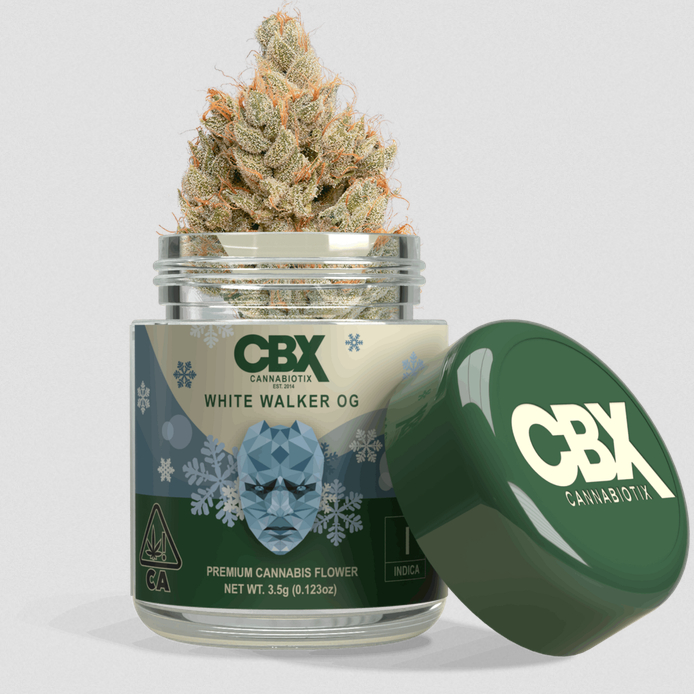
Two jars of cannabis flower sit side by side. One advertises 33% THC. The other lists 27% THC but a higher terpene percentage. Which one is better?
That sounds like a simple question, but the numbers describe different parts of the plant. THC content helps explain a product’s potential intoxicating strength. Terpenes are among the compounds involved in its aroma. Neither percentage measures freshness, consistency, or how a particular person will respond. And neither one, on its own, is a reliable quality score.
The more useful question is what each figure actually tells you, what it leaves out, and how to read the rest of a flower label.
The Short Answer: THC and Terpenes Measure Different Things
THC percentage describes the concentration of the principal intoxicating cannabinoid, or a calculated potential THC value depending on the label. A higher figure means more THC by weight on that measure; it does not guarantee a better product or a particular experience.
Total terpene percentage describes the combined concentration of terpenes measured in a sample. Terpenes contribute to cannabis aroma, but a higher total does not automatically mean a stronger smell, superior flavor, or a predictable effect. Other volatile compounds can influence aroma too.
| Question | THC percentage | Terpene percentage |
|---|---|---|
| What does it measure? | Reported cannabinoid concentration or total potential THC | Measured concentration of a group of aroma-related compounds |
| Does a higher number automatically mean better flower? | No | No |
| Can it predict a person’s experience? | Not on its own | Not reliably |
| Does it establish freshness? | No | No |
| What should you check alongside it? | THCA, delta-9 THC, batch testing, and product condition | Individual compounds, testing date, storage, and product condition |
What Does a 30% THC Label Actually Mean?
A label showing 30% THC can sound like a complete description of a product’s potency. In reality, you first have to establish exactly what the percentage represents. Some flower labels list delta-9 THC separately from THCA, the acidic cannabinoid that can convert into THC when heated. Others display a calculated total potential THC figure.
A widely used calculation is total potential THC = delta-9 THC + (THCA × 0.877). The 0.877 factor accounts for the change in molecular mass during conversion; it is not a promise that all of the theoretical THC will be delivered or absorbed during use.
That distinction matters when two listings appear several percentage points apart. Comparing a delta-9-only figure on one package with a total-potential-THC figure on another is not an apples-to-apples comparison.
There is another limitation. Cannabis flower is a natural material, and laboratory results describe tested samples. A 2025 study published in Scientific Reports found substantial discrepancies between some labeled and independently measured THC results in the Colorado flower products it examined. That does not mean every label is wrong; it means the number should be treated as one measurement, not an absolute guarantee for every bud.
What Do Terpenes Tell You About Flower?
Terpenes are naturally occurring compounds found in cannabis and many other plants. Myrcene, limonene, pinene, linalool, and beta-caryophyllene are familiar names on some cannabis testing reports. They can contribute earthy, citrus, pine-like, floral, and spicy notes, respectively.
But the aroma of a flower is not simply the total of its terpene percentages. Recent chemical research has identified additional odor-active compounds, including certain sulfur-containing compounds, that can shape distinctive cannabis aromas even at relatively low concentrations.
Imagine two flowers that both list 2% total terpenes. Their individual profiles could still be quite different, and so could their aromas. A third flower might report 1.5% total terpenes yet have a scent someone finds more distinctive. A single total percentage hides that complexity.
Does More Terpene Content Mean Stronger Effects?
Not necessarily. Researchers continue to investigate whether terpenes interact with cannabinoids in meaningful ways. The popular idea of an “entourage effect” is a research hypothesis, not a rule that lets anyone predict the effects of a particular flower from a terpene chart. A 2024 scientific review found both supportive and conflicting evidence and called for more research.
Claims such as “limonene always feels energizing” or “myrcene always makes a strain sedating” are more certain than the available human evidence supports. Personal responses can vary, and the amount consumed, THC exposure, individual sensitivity, and setting all matter.
A Real CBX Flower Example: Kush Mountains vs L’Orange
It is easier to see the difference when the figures come from two actual flower descriptions rather than hypothetical jars. High Society’s CBX flower category includes product pages that illustrate why THC and total terpenes can move in different directions.
| Product | Listed THC | Listed total terpenes | What stands out? |
|---|---|---|---|
| CBX Kush Mountains | 26.81% | 1.99% | Lower listed THC, higher listed total terpenes |
| CBX L’Orange | 33.19% | 1.61% | Higher listed THC, lower listed total terpenes |
Those website descriptions present an interesting contrast: L’Orange is listed 6.38 percentage points higher in THC, while Kush Mountains is listed 0.38 percentage points higher in total terpenes. The comparison does not prove that L’Orange is more enjoyable or that Kush Mountains has a stronger aroma. It merely shows how two different measurements can point in different directions.
There is also a practical reason not to treat a menu figure as permanent. High Society’s Kush Mountains page contains differing THC figures between its page metadata and product-detail text. Specific batches and website copy can change. The physical product’s current batch label and any available matching laboratory report should be checked before quoting the values as current stock specifications.
That is a more useful way to approach CBX Cannabiotix or any other flower brand: compare the actual batch information, not just a strain name or a number repeated across listings.
What Else Should You Look At Besides THC and Terpenes?
1. The Individual Terpene Profile
Total terpenes compress several different measurements into one percentage. Where a batch report is available, the individual compounds tell a more specific chemical story. They still should not be treated as a reliable mood or effect forecast.
2. Harvest, Packaging, and Testing Dates
Dates provide context. Terpenes are volatile, and handling and storage can change the chemical profile of flower over time. A package that has been exposed to excess heat or air may not smell the way its original lab result suggests. A fresh-looking number on a screen does not show how the product has been stored.
3. Moisture and Physical Condition
Flower should be evaluated for signs of poor condition, such as excessive dryness, unusual dampness, visible mold, or damaged packaging. Laboratory potency figures do not substitute for product integrity. Never use flower that appears contaminated.
4. Cannabinoids Beyond THC
CBD, CBG, and other cannabinoids may appear in small amounts on a report. Their presence gives a fuller picture of the sample’s chemistry, though it still does not create a reliable formula for predicting individual effects.
5. A Matching Batch Report
A certificate of analysis, sometimes shortened to COA, is most useful when its product name and batch identifier match the package being discussed. Check what was actually tested, the date, and whether the values shown on the menu match that batch. Do not assume a report for one harvest describes another.
Are Indica, Sativa, and Hybrid Labels More Useful?
Those labels can describe how a variety is marketed or its breeding history, but they are too broad to function as dependable effect predictions. Two products labeled “hybrid” may have different cannabinoid and aromatic profiles. Two products labeled “sativa” may also differ substantially.
Rather than deciding from a label alone, compare what can actually be measured and verified. Strain names, brand reputation, THC percentage, terpene percentage, and visual appearance are all incomplete pieces of information. They become more useful together, with realistic expectations about what they can reveal.
How to Compare Two Flower Labels Without Getting Lost in the Numbers
- Check the same measurement. Compare total potential THC with total potential THC, not with delta-9 THC alone.
- Look beyond the terpene total. If the individual profile is available, read it as chemistry information rather than an effects guarantee.
- Match the batch. Confirm that the testing data belongs to the product being described.
- Check dates and packaging. Storage and age matter, especially for aroma-related compounds.
- Consider the whole product. Condition, labeling clarity, and responsible handling matter more than winning a contest for the largest number.
For adults comparing cannabis flower on an online menu, this simple routine is more dependable than assuming the highest THC listing must be the best. It also keeps the comparison focused on information the product can actually support.
Frequently Asked Questions
Is 30% THC flower automatically better than 25% THC flower?
No. The higher value indicates a greater reported THC concentration on the same measurement basis. It does not establish better freshness, aroma, quality, or a more favorable individual experience.
Is 2% total terpenes considered high?
There is no universal threshold that determines quality from a terpene total. The measured percentage is useful context, but individual compounds, testing methods, and product condition also matter.
Can terpenes predict whether flower will feel relaxing or energizing?
Not reliably. Such predictions remain more confident than current human evidence warrants. A terpene profile is a chemical description, not a guaranteed effect chart.
Why does THCA appear separately from THC?
THCA is the acidic precursor to THC. Heating can convert it into THC, which is why some labels show both values and a calculated total potential THC figure.
Why do product websites sometimes show different THC percentages for the same strain?
Different batches can test differently, and website descriptions may be out of date or inconsistent. Confirm the figures on the actual package and matching batch report.
Does a higher terpene percentage mean flower smells stronger?
Not necessarily. Aroma depends on which compounds are present, their concentrations, other odor-active molecules, and how the flower has been stored.
The Bottom Line
THC and terpene percentages answer different questions. One describes cannabinoid potency; the other describes a measured group of compounds involved in aroma. Neither number can tell the whole story about cannabis flower.
Comparisons such as Kush Mountains and L’Orange are useful precisely because the numbers do not all move together. A higher THC label does not erase the rest of the product profile, and a higher terpene total does not automatically make a product superior.
For adults researching flower, the most informative approach is to compare like-for-like measurements, check current batch details, and treat marketing descriptions as starting points rather than promises. Higher percentages are easy to spot. Good information takes a little more reading.